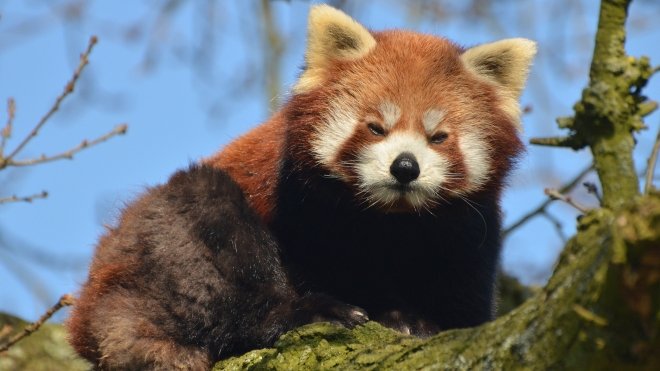
The red panda, scientifically known as Ailurus fulgens and also known as the firefox has captured the hearts of many a zoo visitor and internet surfer, ultimately due to their “cute-factor” [2]. It has particularly grabbed the focus of internet search engine Mozilla Firefox whose mascot is the red panda [3]. This is easy to see from figure 1 above; they are undeniably cute. Yet they are also undeniably a species that is struggling, the IUCN red list currently classifies them as Endangered meaning they face a very high risk of extinction in the wild [4]with less than 10,000 individuals scattered throughout their home range of south-east Asia [5]. Two sub-species of red panda exist, A.f.fulgens and A.f.styani [6]. In captivity there are 659 A.f.fulgens across 265 zoo collections worldwide and 366 A.f.styani across 90 zoos (A.Glatston, personal communication, February 12, 2020). The decreasing wild population status is essentially down to the impact human activity has on this species, but whilst there are negatives there are also positives regarding the impact on their welfare; defined as an animal’s quality of life [7].
But what could possibly be negatively impacting the welfare of this lovable species?
The reduction of the planet’s biodiversity over the last few decades can be explained through the ever-expanding anthropogenic factors [8]. These are changes to the environment caused by human activity [9]. Therefore, it should come as no surprise that the wild population of red pandas is impacted by this, with their main threat being habitat loss [10].
Red pandas are found at high altitudes in the forested Himalayan mountains of Nepal, Bhutan, China and Myanmar [11; 4]. One study has found that anthropogenic factors such as livestock and human population density heavily impact what is considered suitable red panda habitat; this was 18,193 km2 based on just environmental variables such as temperature and vegetation, yet anthropogenic variables reduced this to 13,781 km2 of fragmented habitat [12]. Fragmentation is the breaking up of one large habitat into smaller separate ones through human land use [13] and means that the populations within cannot breed together as they are blocked by roads, resulting in reduced genetics and increased chance of inbreeding [14].
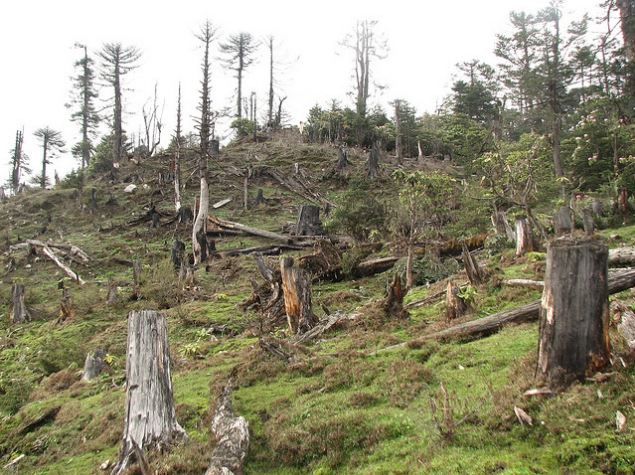
Livestock provide a livelihood for locals yet consume and trample large amounts of bamboo which forms 98% of the red panda diet, and with rapid human population growth more livestock are being kept which increases red panda habitat degradation [15]. Forest trees are cut down to make way for livestock herds and fuelwood use (see figure 2) as well as bamboo for fodder, unsustainable harvesting of these resources contributes hugely to deforestation [16].
This may surprise some, but the welfare of captive red pandas can be negatively impacted by human activity too. But how? Surely that contradicts everything zoological collections today stand to represent. The answer: visitors.
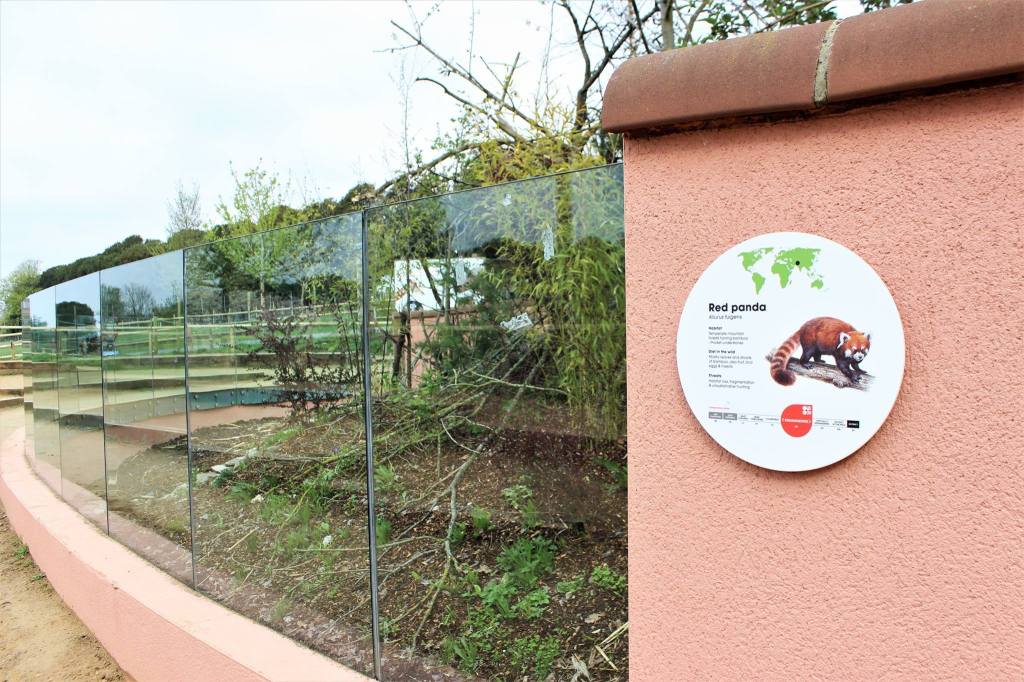
Despite their intriguing appearance red pandas are actually quite shy, easily stressed animals requiring privacy in undisturbed environments, and would rather not be the focus of so much attention [18]. To feel secure, they need the opportunity to put vertical distance between themselves and visitors, preferably using trees and visual barriers on the ground (see figure 3) also help with this [19].
The EAZA Best Practice Guidelines state red panda enclosures should provide public access to no more than two sides in order to allow retreat from disturbance, females after birth become particularly intolerant of this [17; 20]. In 2010 one study found of 69 zoos responding to a survey, 17% of red panda enclosures provided viewing access on just one side, 35% around half, 33% on three of four sides and 14% all round [21].
Insufficient opportunity to escape from visitor view puts red pandas under subconscious stress [17] therefore minimization of this is vital for not only their general welfare, since stress can lead to secondary health issues like gastrointestinal problems [22] but reproductive success too. Being able to remove themselves from visitor view provides red pandas with a sense of control and safety which reduces this stress, particularly when they have cubs [23].
Yet human activity doesn’t just negatively impact the welfare of the red panda, in fact there are many positive impacts that work to counteract the negatives outlined above.
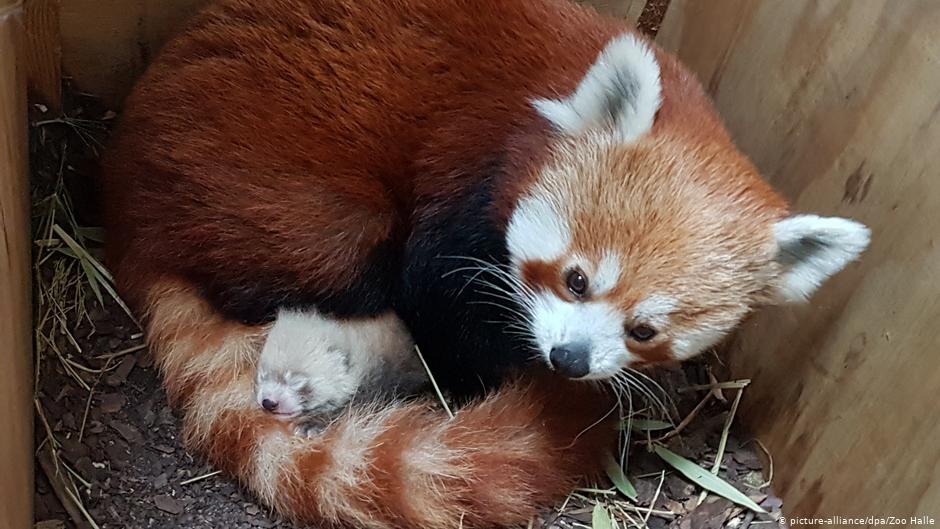
Whilst the IUCN estimates less than 10,000 individuals left in the wild, Red Panda Network estimate as few as 2,500 making it vital that conservation projects are efficient to save this dwindling species [4]. It is also why red pandas are the focus of conservation breeding programmes in zoological collections (see figure 4); keeping a protected, genetically healthy and diverse back up population to safeguard red pandas from extinction [25], through use of genetic supplementation or even re-introduction to the wild once their habitat is stable [4].
High standards of welfare are required for successful breeding to reduce stress and occurrence of health issues, which need to be actively enforced and monitored by zookeepers [26]. Zookeepers are responsible for ensuring standards are met then striving to ensure their animals are happy; the Animal Welfare Act 2006 outlines these as the provision of food and water, a suitable environment, health care, opportunity to express normal behaviour and protection from fear and discomfort [27; 28; 6].
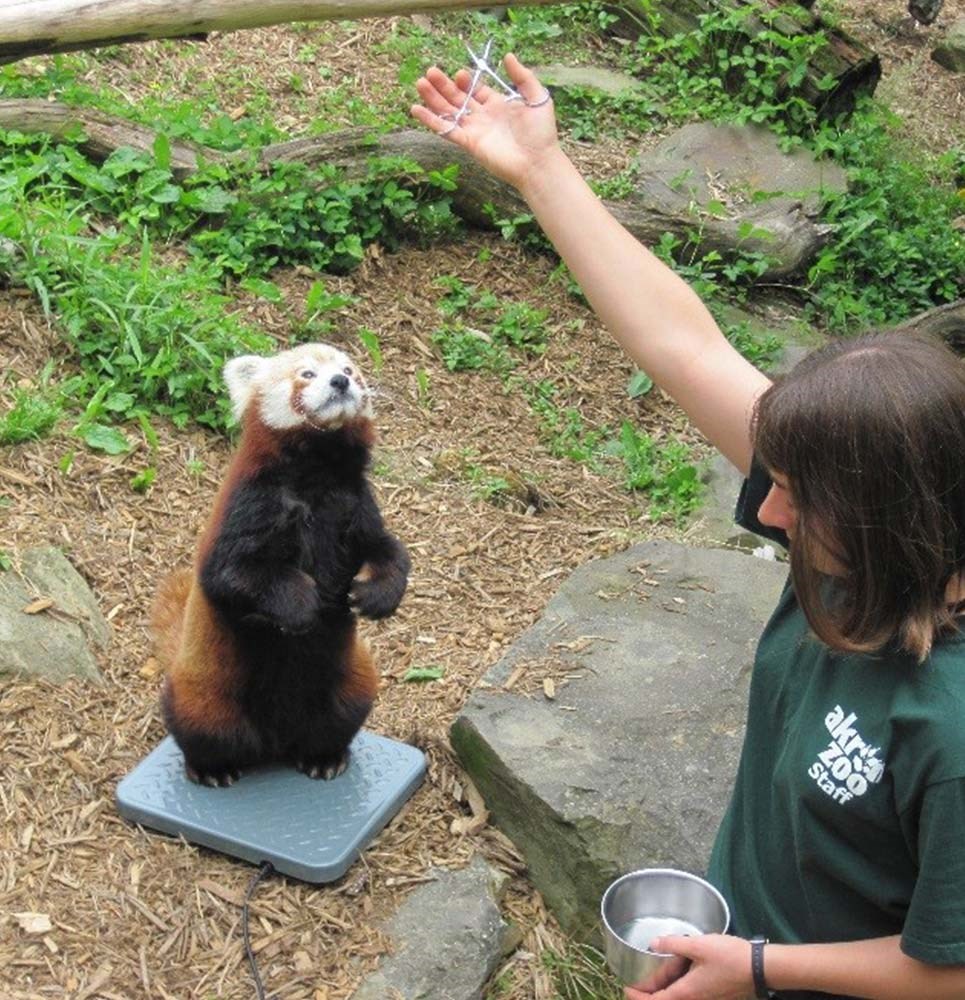
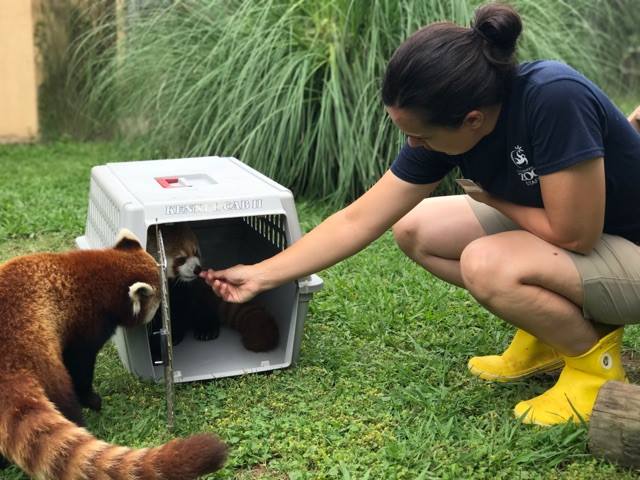
This also links to how direct interaction with keepers positively impacts the welfare of red pandas. This isn’t the common misconception that zookeepers get to cuddle animals all day, rather the training that goes on behind the scenes to minimize the stress involved in performing husbandry tasks such as weighing (see figure 5), crate training (see figure 6) and medicating [17]. It can also lead to the progression of more invasive procedures where keepers can physically touch red pandas to assess body condition, perform ultrasounds and needle injections for annual vaccinations, important for maintaining welfare to ensure they are healthy [30].
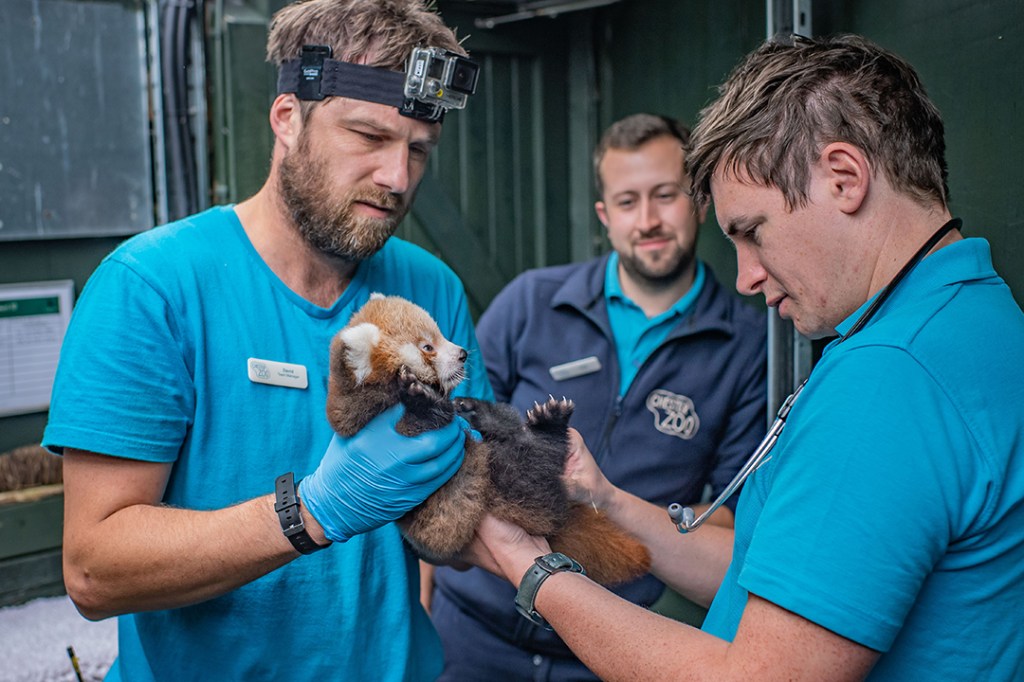
This process enables red pandas to become comfortable around their keepers and also functions as behavioural enrichment, an important part of providing adequate welfare [31]. The act of training establishes a strong animal-keeper relationship, which can help to provide stress free assistance with feeding and health checking of cubs (see figure 7) if breeding is successful [28]. Without this training, sudden everyday interaction or necessary interference during breeding season may cause stress [17].
Whilst the act of deforestation by humans significantly threatens wild red pandas and negatively impacts their welfare by removing their home, they can also face welfare issues in captivity too from the public despite their good intentions. The negative impacts of human action on welfare are counteracted by positive impacts, yet it remains a complicated situation as being able to see red pandas in captivity raises public awareness of the struggles they face. But should their welfare suffer as a consequence? And do the positives outweigh the negatives enough to make it worthwhile?
References
[1] ZSL Whipsnade Zoo. (n.d.). Red Panda. Retrieved from https://www.zsl.org/zsl-whipsnade-zoo/exhibits/red-panda
[2] Schaul, J. C. (2012, February 28). An Interview with Red Panda Expert-Dr.Angela Glatston of the Rotterdam Zoo. [Blog post]. Retrieved from https://blog.nationalgeographic.org/2012/02/28/an-interview-with-red-panda-expert-dr-angela-glatston-of-the-rotterdam-zoo/
[3] Bradford, A. (2016). Facts about Red Pandas. Retrieved from https://www.livescience.com/57312-red-pandas.html
[4] Glatston, A., Wei, F., Than Zaw., & Sherpa, A. (2015). Ailurus fulgens. Retrieved from https://dx.doi.org/10.2305/IUCN.UK.2015-4.RLTS.T714A45195924.en
[5] Edge. (n.d.). 22. Red Panda. Retrieved from http://www.edgeofexistence.org/species/red-panda/#overview
[6] Red Panda Network. (n.d.). Red Panda Facts. Retrieved from https://www.redpandanetwork.org/red-panda-facts/
[7] Hosey, G., Melfi, V., & Pankhurst, S. (2013). Zoo animals behaviour, management, and welfare (2nd ed.). Oxford: Oxford University Press.
[8] Tittensor, D. P., Walpole, M., Hill, S. L. L., Boyce, D. G., Britten, G. L., Burgess, N. D., …Ye, Y. (2014). A mid-term analysis of progress toward international biodiversity targets. Science, 346(6206), 241-244. DOI: 10.1126/science.1257484
[9] Cambridge University Press. (2020). anthropogenic. Retrieved from https://dictionary.cambridge.org/dictionary/english/anthropogenic
[10] Ghose, D., & Dutta, P. K. (2011). Status and Distribution of Red Panda Ailurus fulgens fulgens in India. In A. R. Glatston (Ed.), Red Panda Biology and Conservation of the First Panda (pp. 357-373). London: Elsevier.
[11] Bista, D., Shrestha, S., Sherpa, P., Thapa, G. J., Kokh, M., Lama, S. T., Khanal, K., Thapa., A., & Jnawali, S. J. (2017, October 11). Distribution and habitat use of red panda in the Chitwan-Annapurna Landscape of Nepal. PLoS ONE, 12(10). https://doi.org/10.1371/journal.pone.0178797
[12] Panthi, S., Wang, T., Sun, Y., & Thapa, A. (2019, December). An assessment of human impacts on endangered red pandas (Ailurus fulgens) living in the Himalaya. Ecology and evolution, 9(23), 13413-13425. https://dx.doi.org/10.1002%2Fece3.5797
[13] Rogan, J. E., & Lacher Jr, T. E. (2018). Impacts of Habitat Loss and Fragmentation on Terrestrial Biodiversity. In Reference Module in Earth Systems and Environmental Sciences. Retrieved from https://doi.org/10.1016/B978-0-12-409548-9.10913-3
[14] Daley, J. (2017, September 28). Panda Habitat is Severely Fragmented, Placing Pandas at Risk. Smithsonian Magazine. Retrieved from https://www.smithsonianmag.com/smart-news/satellites-show-panda-habitat-increasingly-fragmented-180965029/
[15] Red Panda Network. (n.d.). Threats. Retrieved from https://www.redpandanetwork.org/red-panda-facts/threats/
[16] Acharya, K. P., Shrestha, S., Paudel, P. K., Sherpa, A. P., Jnawali, S. R., Acharya, S., & Bista, D. (2018, July). Pervasive human disturbance on habitats of endangered red panda Ailurus fulgens in the central Himalaya. Global Ecology and Conservation, 15. Retrieved from https://doi.org/10.1016/j.gecco.2018.e00420
[18] Loeffler, K. (2011). Red Panda Husbandry for Reproductive Management. In A. R. Glatston (Ed.), Red Panda Biology and Conservation of the First Panda (pp. 231-255). London: Elsevier.
[19] AZA Small Carnivore TAG. (2012). Red panda Care Manual. Association of Zoos and Aquariums. Retrieved from https://assets.speakcdn.com/assets/2332/red_panda_care_manual_2012.pdf
[20] Weerman, J. (2015). EAZA Best Practice Guidelines Red Panda (Ailurus fulgens). (1st ed.). Retrieved from https://www.eaza.net/assets/Uploads/CCC/2015-Red-panda-EAZA-Best-Practice-Guidelines-Approved.pdf
[21] Erikson, P., Zidar, J., White, D., Westander, J., & Andersson, M. (2010). Current Husbandry of Red Pandas (Ailurus fulgens) in Zoos. Zoo Biology, 29(6), 732-740. https://doi.org/10.1002/zoo.20323
[22] Philippa, J., & Ramsay, E. (2011). Captive Red Panda Medicine. In A. R. Glatston (Ed.), Red Panda Biology and Conservation of the First Panda (pp. 271-285). London: Elsevier.
[23] Zidar, J. (2008). Keeping red pandas in captivity (Unpublished doctoral thesis) Swedish University of Agricultural Sciences: Skara. Retrieved from https://stud.epsilon.slu.se/10802/1/zidar_j_170912.pdf
[24] Marwell Wildlife. (2019). Retrieved from https://www.facebook.com/marwellwildlife/photos/pcb.10155319537157168/10155332193757168/?type=3&theater
[25] Turner-Neal, C. (2016, July 25). The Role of Zoos in Red Panda Conservation. [Blog post]. Retrieved from https://www.redpandanetwork.org/the-role-of-zoos-in-red-panda-conservation/
[26] Greggor, A. L., Vicino, G. A., Swaisgood. R. R., Fidgett, A., Brenner, D., Kinney, M. E., Farabaugh, S., Masuda, B., & Lamberski, N. (2018, December 18). Animal Welfare in Conservation Breeding: Applications and Challenges. Frontiers in Veterinary Science, 5. https://doi.org/10.3389/fvets.2018.00323
[27] DEFRA. (2012). Secretary of State’s Standards of Modern Zoo Practice. Retrieved from https://assets.publishing.service.gov.uk/government/uploads/system/uploads/attachment_data/file/69596/standards-of-zoo-practice.pdf
[28] legislation.gov.uk. (2006). Animal Welfare Act 2006. Retrieved from http://www.legislation.gov.uk/ukpga/2006/45/contents
[29] Zoo Halle. (2019). Germany: Rare red panda cub born in Halle. Retrieved from https://www.dw.com/en/germany-rare-red-panda-cub-born-in-halle/a-49418460
[30] Morris, A. (2016, August 20). Red Panda Training Important to Animal Care and Health. [Blog post]. Retrieved from https://potterparkzoo.org/red-panda-training-important-to-animal-care-and-health/
[31] Melfi, V. (2013). Is training zoo animals enriching? Applied Animal Behaviour Science, 147(3-4), 299-305. https://doi.org/10.1016/j.applanim.2013.04.011
[32] Akron Zoo. (2020). Animal Enrichment & Training. Retrieved from https://www.akronzoo.org/animal-enrichment
[33] Chattanooga Zoo. (2017). Retrieved from https://www.facebook.com/ChattZoo/posts/these-two-are-too-cute-anndi-and-avi-the-red-pandas-have-been-training-to-crate-/10154488433735764/
[34] Chester Zoo. (2019). Red panda twins born! Rare cubs have their first health check. Retrieved from https://www.chesterzoo.org/news/red-panda-twins-born-rare-cubs-have-their-first-health-check/
 Welfare of the firefox: on fire or in trouble?